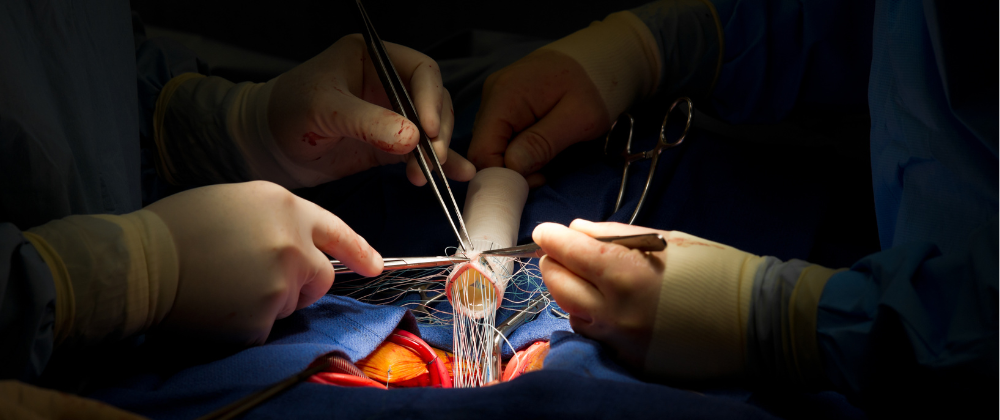
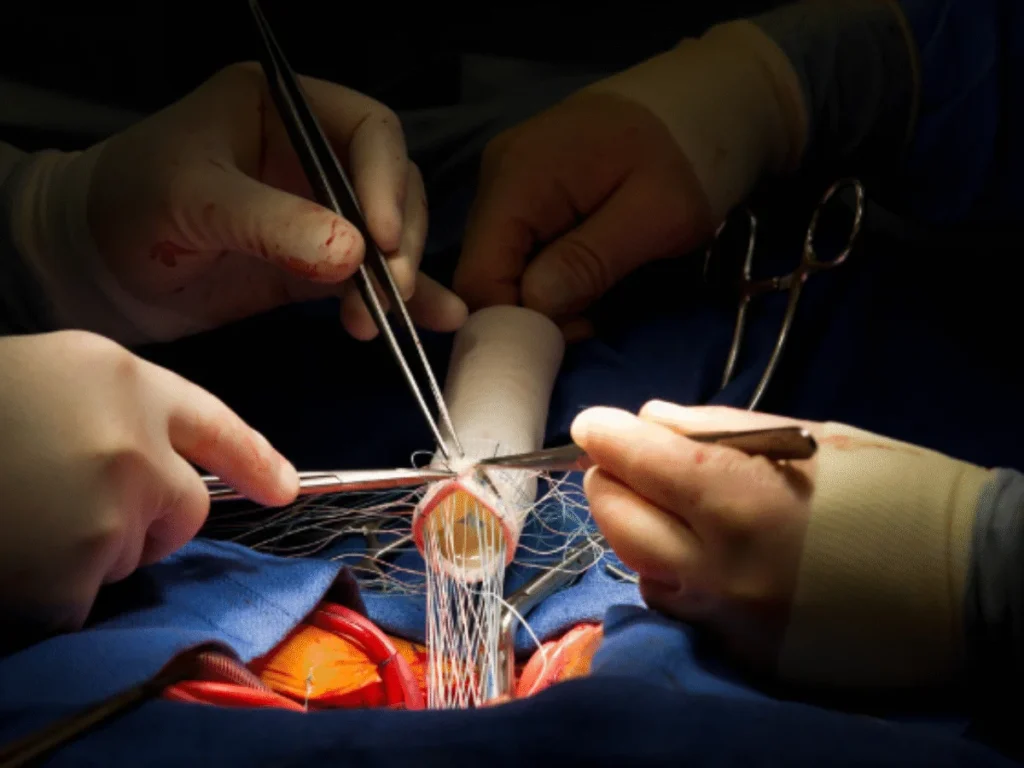
Aortic Valve Replacement (AVR) is an important treatment for patients with damaged or diseased aortic valves. Dr. Raghavendra Murthy provides cardiac care focused on evaluation, treatment planning, valve replacement and recovery.
Aortic Valve Replacement (AVR) surgery is needed when the aortic valve in the heart becomes damaged or diseased, typically due to conditions such as aortic stenosis or aortic regurgitation.
Aortic stenosis causes narrowing of the valve, while aortic regurgitation causes leakage of the valve. These conditions can reduce normal blood flow and may cause symptoms such as shortness of breath, fatigue, chest pain and heart failure.
AVR involves replacing the faulty valve with either a biological valve made from animal tissue or a mechanical valve made from synthetic materials.
Aortic Valve Disease
When Can Aortic Valve Disease Require Replacement?
Valve replacement may be considered when the valve is severely damaged and symptoms or heart function cannot be adequately managed with medication alone.
Aortic Stenosis
Aortic stenosis occurs when the aortic valve becomes narrowed, restricting blood flow from the heart.
›Shortness of breath
›Fatigue
›Chest discomfort
›Reduced exercise tolerance
Aortic Regurgitation
Aortic regurgitation occurs when the aortic valve does not close properly and blood leaks backward.
›Breathlessness
›Fatigue
›Reduced activity tolerance
›Changes in heart function
Treatment Assessment
When Is Aortic Valve Replacement Considered?
A detailed cardiac evaluation helps determine the severity of valve disease and whether valve replacement is appropriate.
01
Valve Disease Is Identified
Tests such as echocardiography help evaluate the structure and function of the aortic valve.
02
Symptoms Are Evaluated
Symptoms such as breathlessness, fatigue and chest discomfort are considered along with test findings.
03
Heart Function Is Assessed
The overall health of the heart and severity of valve damage are evaluated.
04
Treatment Is Planned
The appropriate approach is selected based on the patient’s condition, age, lifestyle and overall health.
Treatment Options
Aortic Valve Replacement Options
Aortic valve replacement can be performed using different approaches. The appropriate method depends on the patient’s condition and clinical assessment.
SURGICAL APPROACH
Open-Heart Aortic Valve Replacement
This traditional surgical approach involves making an incision in the chest to access the heart and replace the damaged aortic valve.
Access to the heart through surgery
Removal of the damaged valve
Placement of the replacement valve
Post-operative hospital monitoring
MINIMALLY INVASIVE OPTION
Transcatheter Aortic Valve Replacement — TAVR
TAVR is a minimally invasive approach in which the replacement valve is delivered through a catheter, often inserted through the leg.
Catheter-based treatment
Does not require traditional open-heart access
May be considered for selected high-risk patients
Suitability depends on clinical evaluation
Valve Selection
Mechanical Valve vs Tissue Valve
The type of replacement valve can vary. Valve selection is discussed with the patient based on factors such as age, lifestyle and overall health.
Mechanical Valve
Bioprosthetic / Tissue Valve
Made from durable synthetic materials.
Made from biological animal tissue.
Often considered for younger patients.
May be selected depending on the patient’s individual circumstances.
Requires lifelong blood-thinner medication.
Does not require lifelong blood thinners for the valve itself, according to the source content.
Designed for long-term durability.
May need replacement after approximately 10–15 years according to the source page.
Valve selection is individualized. Dr. Raghavendra Murthy discusses the available options with patients while considering age, lifestyle and overall health.
Your Treatment Journey
What to Expect During Aortic Valve Replacement Care
From assessment to recovery, each stage is planned around the patient’s heart condition and treatment needs.
01
Evaluation
Imaging tests, blood tests and, where required, cardiac catheterization are used to evaluate the heart and valve.
02
Treatment Planning
The treatment approach and valve type are considered according to the patient’s condition.
03
Valve Replacement
The procedure may involve open-heart surgery or TAVR depending on individual suitability.
04
Hospital Recovery
The medical team monitors recovery, manages pain and ensures heart function is stable.
05
Follow-Up Care
Patients receive guidance for recovery and gradual return to normal activities.
Before Treatment
Preparing for Aortic Valve Replacement
Before the aortic valve replacement procedure, patients undergo a detailed evaluation to assess the overall health of the heart and determine the most appropriate treatment approach.
Patients may also need to stop certain medications or make specific lifestyle adjustments before surgery as advised by their healthcare team.
›Imaging tests
›Blood tests
›Cardiac evaluation
›Possible cardiac catheterization
›Medication review
›Pre-operative instructions
After Treatment
Recovery After Aortic Valve Replacement
Following valve replacement, patients stay in the hospital for a few days while the medical team closely monitors recovery, manages pain and checks heart function.
Stage 01
Hospital Care
Recovery is monitored closely after the procedure, with attention to pain management and heart function.
Stage 02
Gradual Recovery
Patients follow an individualized recovery plan and gradually return to daily activities as advised.
Stage 03
Follow-Up
Ongoing follow-up helps guide recovery and supports continued heart care.
Meet Your Cardiac Surgeon
Aortic Valve Care With Dr. Raghavendra Murthy
Dr. Raghavendra Murthy provides cardiac surgical care for patients requiring heart valve replacement. Treatment planning is based on the patient’s valve condition, age, lifestyle and overall health.
Patients are guided through evaluation, treatment planning, the valve replacement procedure and recovery.
TAVR is a minimally invasive procedure performed through a catheter, while open-heart surgery requires opening the chest to access the heart and replace the damaged valve.
Recovery involves a hospital stay followed by several weeks of gradual healing. Patients are advised to avoid strenuous activities and follow the recovery guidance provided by their healthcare team.
Preparation includes pre-surgery tests, medication adjustments as instructed by the doctor and discussion of recovery and post-operative care with the healthcare team.